
Director
 Dr. Ghassan El-Baalbaki, Ph.D, Psychologist, is a Professor in the department of Psychology at UQÀM. He is also director of graduate studies at UQAM. His primary research interests include personality traits and disorders and their relation to physical illnesses (eg., scleroderma, cancer), marital relationships, anxiety and mood disorders, as well as post-traumatic stress disorder. Clinically, he is interested in cognitive behavioral approaches and hypnosis.
Collaborators
Didier Acier, Ph.D
Dr. Didier Acier, Ph.D., is a Professor at the Universités de Psychologie Clinique, Université de Nantes. He is responsible for the creation of the “Clinical Psychology and Integrative Psychopathology (PCPI)”, a specialized training course, and is Co-Head of the “Well-being and Subjectification Process” (EA 4638) team. His research focuses on addiction and addictive behavior, integrative psychotherapy, and psychodynamic psychotherapy.
Marc-Simon Drouin, Ph.D
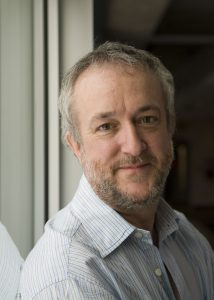 Dr. Drouin, Ph.D., is a Psychologist, Clinical Psychology Professor and the Director of the department of Psychology at UQÀM. His research interests and expertise include psychopathology, humanistic psychotherapy, Gestalt therapy, clinical judgment, the efficacy of psychotherapy, depression, personality disorders, and the integration of different psychotherapeutic models.
Christophe Fortin, Ph.D
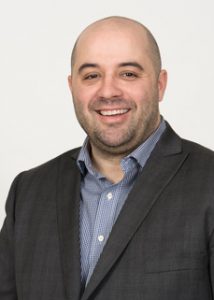 Dr. Christophe Fortin is a Professor of Psychology at the University of Ottawa, an Associate Professor in the Department of Psychology at UQÀM, and the Assistant Scientific Director at the Center for Trauma Studies at the Centre de recherche de l’Institut universitaire en santé mentale de Montréal. He is the recipient of several Excellence Scholarships and has several institutional and government grants to support his work on post-traumatic stress disorder (PTSD). He has a Doctor of Psychology (Ph.D.) from UQÀM and has completed a post-doctoral degree in Criminology from the Université de Montréal. For the last 15 years, Dr. Fortin has been interested in several aspects of PTSD, particularly the effectiveness of different types of therapies and the health-related costs of PTSD. He is currently co-leading a randomized controlled trial comparing the efficacy of two types of cognitive behavioral interventions for PTSD.
Stéphane Guay, Ph.D
 Dr. Stéphane Guay is the Director of the Centre d’étude sur le trauma (CET) and the VISAGE research team. He is also the Scientific Research Adjunct Director at the CIUSSS de l’Est-de-l’Île de Montréal and the Scientific Director at the Centre de recherche de l’Institut universitaire en santé mentale de Montréal (CRIUSMM). Dr. Guay is a Professor at the École de criminologie at the Université de Montréal. He studies and assesses the efficacy of different assessment and psychological and pharmacological treatment modalities for PTSD, the risk and protective factors for development of PTSD, as well as the prevention of the disorder. He also works on identifying components of victims’ social circle that may help their recovery and on improving psychological interventions for individuals who develop PTSD. Furthermore, Dr. Guay studies the care of victims of acts of serious violence, particularly for those that happen in the workplace. His research aims to improve psychosocial interventions for people who are at risk of developing post-traumatic reactions, while taking into account women and men’s different needs. For more information
Martin Lepage, Ph.D, C.Psych.
 Dr. Martin Lepage is a James McGill Professor in the department of Psychiatry at McGill University. He was also awarded a Research Chair from the Fonds de recherche du Québec – Santé (FRQ-S) because of his research on the cognitive neurosciences of psychosis. Dr. Lepage is the Director of Clinical Research at the Douglas Mental Health University Institute and he directs the psychological services offered there as part of the Psychotic Disorders Program. He and his team have developed a research program vastly applied for schizophrenia and psychosis, designed for the early stages of the development of these disorders. Dr. Lepage aims to have a direct and immediate impact on the psychotic patient’s well-being. His research includes a longitudinal exploration of the potentially beneficial effects of certain antipsychotics on the cognitive capacities and cerebral structures in youth presenting with a first-episode psychosis, the development of novel psychological interventions and the exploration of factors underlying individual differences regarding treatment responses, and the assessment of the efficacy of cognitive behavioral therapies that target different issues associated with psychosis (social anxiety, identity disorders, memory disorders). More recently, his research group combined neuroimaging techniques with psychological interventions to study the process of neuroplasticity. Dr. Lepage manages the activities at the Centre d’intervention psychologique personnalisée pour la psychose, which provides the necessary infrastructure for his research. His work is financed by the CIHR, the NSERC, and the FRQ-S, as well as by partners in the industry. For more information
David Ogez, Ph. D
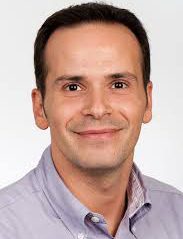
Dr. David Ogez has clinical and research experience in the medical community. He has a varied clinical activity in liaison psychiatry, particularly with oncology and chronic pain clients. His research focuses on the development of intervention and training programs in adult and pediatric oncology. His areas of research are the development of assessment tools to acquire therapeutic skills in medical hypnosis / self-hypnosis; the prevention and treatment of emotional distress and pain through the development of behavioral programs, and the training of caregivers in communication techniques derived from cognitive behavioral therapies, humanistic and medical hypnosis.
Elias Rizkallah, Ph.D
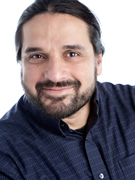 Dr. Rizkallah is a Professor in the department of Sociology at UQÀM. His research interests include research methodology (qualitative, quantitative and mixed) in humanities and social sciences, computer-assisted text analysis, and the semantics of intertextuality. Dr. Rizkallah is also a specialist on the theoretical framework of social representations, which he applies to multiple identity dynamics and inter-cultural relations. He develops informational objects, he is currently working on the design of informational systems to assist data analysis (data mining, collaborative annotations, interoperability, linked data, reuse of secondary data…). Professor, researcher, trainer, information systems designer, and above all, methodologist, Élias Rizkallah applies his expertise in a range of research fields. He notably started an international initiative facilitating exchanges between different qualitative analysis programs (REFI) and a francophone international network of speech analysis (FRIANDIS). For more information
Ph.D students
Personality and psychological health
Éric Hanigan, B.Sc., Ph.D/Psy.D candidate since 2021
 During his honors thesis in the Bachelor of Psychology program (2019-2020),
Eric developed and validated a new measure of affective states using music. The Measure
of Emotions by Music © is the first validated questionnaire that uses music to describe
emotional states. As a violist himself, his doctoral research projects focus on the well-
being of musicians. Under the supervision of Dr. Dupuis and co-directed by Dr. El-
Baalbaki, Eric will develop a yoga intervention to test its effects on music performance
anxiety, flow, and musculoskeletal pain with university students in music interpretation.
He is also a research assistant with the medical Startup Ditch Labs Inc., which is
developing an innovative smoking cessation treatment by combining artificial
intelligence, pharmacology, and psychology. His research interests include cognitive
behavioral therapies, mood and anxiety disorders, addiction, mindfulness-based
interventions, and yoga. Member of the Canadian Armed Forces since 2013, he is also
interested in post-traumatic stress disorder with veterans.
Mario Laurion, B.Sc., Psy.D candidate since 2020

Mario completed an Honours thesis in neuropsychology and obtained his bachelor’s degree in
psychology at UQAM in 2018. His Honours thesis focused on the difference in attentional
capture produced by certain emotional stimuli in the presence, or not, of a diagnosis of ADHD in
adults. He is interested in the developmental path of people choosing psychotherapy as a
profession, more specifically the presence or absence of a traumatic history. In addition, he is
interested in personal and professional challenges that may affect the quality of therapeutic
intervention work with clients, as well as the self-care activities that clinicians employ to
promote their own psychological well-being. Mario’s exploratory doctoral essay will focus on the
psychological state (past and current) as well as the ongoing self-care practices of people with
limited authorization to exercise (doctoral students and admission candidates) with the Ordre
des psychologues du Québec. Mario’s clinical interests focus on personality disorders, subclinical
psychological distress, as well as psychological well-being.
Jessica Renaud, B.Sc., LL.B., Psy.D candidate since 2018
 Jessica has a Bachelor degree in Psychology (2012) and a Bachelor of Law (2014). She founded her own law firm in 2015, Jessica Renaud, Avocate, to provide families with legal services. Her doctoral essay focuses on the personality traits specific to lawyers practicing family law, as well as the psychological difficulties associated with practicing law. Furthermore, Jessica volunteers at Autisme Sans Limites as a Yoga Instructor. Her clinical interests are anxiety disorders, mood disorders, psychological distress at work and autism. She practices the cognitive-behavioral approach and attentive presence.
Personality and couples
Stéphanie Juneau, B.Sc., Psy. D candidate since 2019

Stéphanie’s honor’s thesis examined the symptoms of depression and anxiety among caregivers of people living with systemic sclerosis. Her doctoral essay focuses on the marital interactions and mental health of male caregivers whose partners have systemic sclerosis. Her clinical interests include personality disorders, depression, anxiety and intellectual impairments. Since 2020, she has been working as a pet therapist for people who have varying mental health issues.
Claire Deken, Psy.D candidate since 2018
 During her Psychology licence in France, Claire did a student exchange at the University of Alberta, which convinced her to continue her studies in Canada. She completed her undergraduate program at UQÀM in order to specialize herself in the cognitive behavioral approach. Her research interests include personality changes due to romantic relationships and problem-solving in couples. As part of her doctoral essay, she studies the associations between personality and problem-solving in couples using the 11 dimensions of the IDCS scale.
Personality and addiction
Roxanne Hébert-Ratté, B.Sc., Ph.D/Psy.D candidate since 2016

Roxanne is currently working on her doctoral thesis, with Ghassan El-Baalbaki and Magali Dufour as her directors. In her thesis, Roxanne is realizing multiple profile analyses of videogame players in order to identify how different variables combine in explaining different types of videogame usage. She is also pursuing a practicum at the Centre de services psychologiques of UQAM, working with different types of difficulties experienced by children and adolescents. Her research interests mainly gravitate around technologies, dynamics associated with their usage, and their consequences on players and their interpersonal environments. She also cultivates an interest for the situation of female users of traditionally masculine technologies (ex., online videogames). On the clinical level, Roxanne has a particular interest for problems related to anxiety, behavior* problems, compulsive behaviors and eating disorders. The cognitive-behavioral approach being her main theoretical framework, she also aims to, in the near future, develop an expertise in the psychodynamic approach and in Emotion-focused therapy, in order to be able to offer more personalized interventions to her clients.
Personnality and deviance
Marie Rousseau, B.Sc, Psy.D candidate since 2017
 Marie’s Honors Thesis examined the associations between oculomotor responses and sexual arousal, and the association between juvenile pornography consumption and psychopathy. In her thesis, Marie is studying how psychopathy influences sexual deviance and acting out in a population of child sex offenders and consumers of child pornography. Her research interests include pedophilia, sexual attackers, and psychopathy. She started her first internship in a private clinic, then continued at the Correctional Servie of Canada in Laval.
Personality and post-traumatic stress disorder (PTSD)
Maria Kanter, M.A. Counselling Psy, DPsy Candidate since 2020
Maria holds an M.A. in Educational Technology since 2009 and spent 10 years working internationally as an instructional designer specializing in human performance improvement and training development. She earned an M.A. in Counselling Psychology from McGill with a specialization in psychodynamic therapy from the Argyle Institute, and additional certification in Cognitive Behavior Therapy (CBT) from the Allan Institute in 2019. Her research interests are focused on barriers to access mental health services for people who have suffered from trauma. She currently works at the Montreal Therapy Center since the summer of 2019. Using a humanistic frame with tools from CBT, her clinical work is focused on adults of 17+ years with varied presenting problems.
Danielle Penney, B.A., Ph.D/Psy.D candidate since 2018
 Danielle received her B.A. in Psychology from Concordia University in 2014 and has been working as a Research Coordinator in the Psychosis Program in Martin Lepage’s Laboratory at the Douglas Mental Health University Institute since 2015. Danielle’s doctoral research investigates associations between emotion regulation, interpersonal difficulties and trauma history in the context of psychosis. Her thesis specifically explores the potential mediating roles of emotion regulation and interpersonal difficulties on the relationship between childhood trauma and psychosis severity. A further goal of her PhD is to implement a pilot study examining the feasibility and acceptability of an emotion regulation and interpersonal skills-based CBT intervention for individuals with schizophrenia spectrum disorders and a history of childhood trauma. Her clinical interests include cognitive behavioral approaches to improving functional outcome in psychosis.
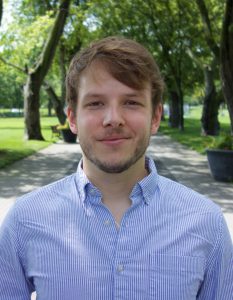
Maxime Fortin, B.Sc., Ph.D/Psy.D candidate since 2015
During his honors thesis in the Bachelor of Psychology program (2019-2020),
Eric developed and validated a new measure of affective states using music. The Measure
of Emotions by Music © is the first validated questionnaire that uses music to describe
emotional states. As a violist himself, his doctoral research projects focus on the well-
being of musicians. Under the supervision of Dr. Dupuis and co-directed by Dr. El-
Baalbaki, Eric will develop a yoga intervention to test its effects on music performance
anxiety, flow, and musculoskeletal pain with university students in music interpretation.
He is also a research assistant with the medical Startup Ditch Labs Inc., which is
developing an innovative smoking cessation treatment by combining artificial
intelligence, pharmacology, and psychology. His research interests include cognitive
behavioral therapies, mood and anxiety disorders, addiction, mindfulness-based
interventions, and yoga. Member of the Canadian Armed Forces since 2013, he is also
interested in post-traumatic stress disorder with veterans.
Personality and hypnosis
Émilie Dumont, B.Sc., M. Sc., Ph.D/D.Psy candidate since 2019

Émilie’s Masters research examined the long-term psychological impact of grief on parents who have lost a child from cancer. This research experience convinced her to pursue her research studies in the field of health psychology. As part of her doctoral thesis, she will initiate a pilot study leading to the development of a program to prepare for childbirth using medical hypnosis in Birth Centers in Quebec. She is interested in medical hypnosis as an alternative to epidural anesthesia during childbirth.
Honors students
Catherine Hébert (2014-2015)
Catherine did her Honors Thesis in the laboratory, in which she conducted a systematic review of the scientific literature on the efficacy of cognitive behavioral therapy for severe generalized anxiety disorder (GAD).
Roxanne Hébert-Ratté (2015-2016)
See above profile.
Marie Rousseau (2016-2017)
See above profile.
Stéphanie Juneau (2019-2019)
See above profile.